2025

Uses and structures that do not conform to a zoning ordinance are deemed “nonconforming uses” and “nonconforming structures,” respectively. Uses relate to the utilization of land (e.g. type of activity/operation), whereas structures are dimensional in nature (e.g. square footage, height, setbacks, etc.). But, what is the proper classification of a nonconforming structure that contains a

In an ideal scenario for any property owner or developer looking to build on Long Island, all aspects of a new development project will comply with the applicable provisions of a municipality’s zoning ordinance. The reality for many, however, is that there is usually some element of the project that is either not permitted or

On March 27, 2025, Empire State Development, New York State’s chief economic development agency, announced the launch of the Long Island Forward Housing Program (LIFHP), a $10 million initiative designed to promote and accelerate the development of affordable multifamily housing across Nassau and Suffolk Counties.  Instead of providing direct grants, Empire State Development will

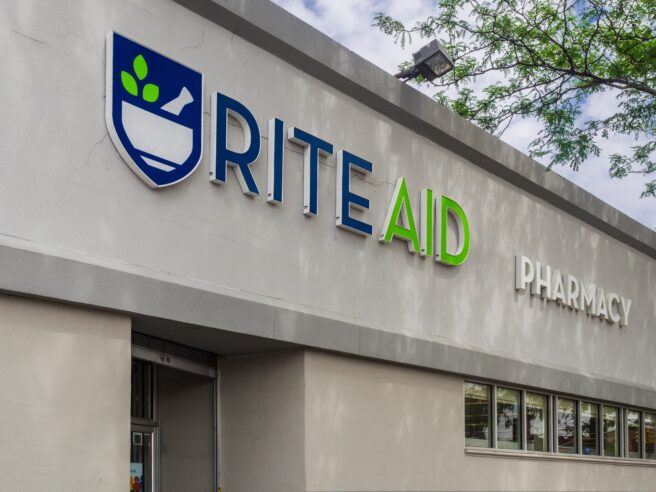
Suburban strip malls have been a staple of Long Island’s retail identity – convenient, accessible, and often anchored by big-name national chains. But, as retail trends evolve and those anchor tenants face uncertainty and for some, extinction, these once thriving properties are faced with the looming question of what comes next. For example, Rite Aid has struggled to stay afloat after filing for bankruptcy in 2023 and has left several Long Island landlords with vacant storefronts. However, this story isn’t unique to Rite Aid. Sears, Kmart, Bed Bath & Beyond, Party City – all large household names that at one-point anchored centers across Long Island. Now, these brands have downsized or disappeared entirely.

Rite Aid joins a growing list of retailers that now are either extinct or dramatically reduced in presence but once served as key anchors for many Long Island centers. JCPenny and Lord & Taylor filed for bankruptcy and shut down key Long Island locations. Bed Bath & Beyond left large footprints across Long Island after liquidating in 2023. Toys “R” Us, Office Max and Party City have all closed stores creating large format vacancies. Not only do these closures leave visible gaps in the retail landscape, they highlight a larger trend: many legacy retail chains are no longer reliable long term anchors.Continue Reading Retail Reckoning for Suburban Strip Malls

Restrictive covenants are common conditions of zoning approvals. Municipal boards typically require applicants to record restrictive covenants as a condition of approval. These restrictive covenants are drafted to “run with the land,” meaning the covenants automatically transfer with the property.

Generally, restrictive covenants are enforceable in New York, provided they are reasonable and benefit all property owners in the community and are not inconsistent with public policy or violate a property owner’s rights. See, Deak v. Heathcote Association, 191 AD2d 617 (2d Dept 1993) (party seeking extinguishment of the restrictive covenants must prove (1) lack of benefit derived from enforcement of the restriction, and (2) legally cognizable reason for the extinguishment of the restriction under RPAPL 1951, such as “changed conditions” which render the purpose of the restriction incapable of being accomplished). Continue Reading Restrictive Covenants: The Devil Is in the Details…

All civil judicial proceedings must be in the form of an action – unless otherwise authorized by statute, i.e. in the form of a special proceeding (see CPLR 103[b]). While most lawsuits are brought solely in the form of either a “special proceeding” or an “action,” land use litigants frequently combine the two into a “hybrid proceeding-action.” In the land use context, special proceedings are commonly brought pursuant to CPLR Article 78 to challenge the determinations of local bodies or officers, and litigants will often simultaneously bring an action to assert one or more plenary claims for, among other things, declaratory relief.

The CPLR requires specific papers and pleadings for the commencement and prosecution of each type of lawsuit, and, concomitantly, for a hybrid lawsuit. A litigant’s failure to strictly comply with the CPLR’s requirements may render certain claims jurisdictionally defective and/or untimely. A recent Decision, Order and Judgment of the Supreme Court, Albany County, in Clean Air Coalition of Western New York, Inc. v New York State Pub. Serv. Commn. (2024 NY Slip Op 24288 [Sup Ct, Albany County 2024]), discussed below, is illustrative.Continue Reading Hybrid Highlights: Avoiding the Pitfalls of a Land Use Litigation Technique

The Nature Conservancy (TNC), a global environmental nonprofit founded in 1951, is offering grants of up to $50,000 across Long Island and New York State to support conservation and climate adaptation initiatives, with a focus on projects that protect lands and waters crucial for adapting to climate change.

This initiative is part of TNC’s 2025 Climate Resilience Grant Program (CRGP), which awards grants to local organizations and supports fee and easement acquisitions connecting critical floodplains and shorelines, helping to mitigate flooding and erosion.  The program also provides funding for organizational capacity-building, as well as planning and strategy development.  

TNC prioritizes projects that involve meaningful community engagement, especially in underserved and frontline communities, and that work with groups historically excluded from conservation, aiming for more equitable outcomes for people and communities.Continue Reading Empowering Long Island’s Future: Nature Conservancy Supports Local Conservation Efforts

Amidst the holidays and end-of-year scramble, New York State Governor Kathy Hochul vetoed legislation that would have required Industrial Development Agencies to have school district and labor union representatives on their governing board and/or board of directors.

Industrial Development Agencies, commonly known as “IDAs,” are public benefit corporations, a form of governmental entity created by the New York State Legislature. IDAs are authorized by New York State law to grant economic incentives, including tax abatements and Payment-In-Lieu-of-Tax (“PILOT”) Agreements, to businesses to encourage local economic development and growth, and meaningful job creation.

IDA boards are comprised of private citizens appointed by local government, with board members generally having significant experience in private sector business, economic development, finance and government.Continue Reading Critical End-of-Year Veto for Legislation Impacting Industrial Development Agencies