
Municipalities on Long Island are struggling to control rental properties. In Southampton, rental properties are governed by Chapter 270 of the Southampton Town Code (the “Code”). Section 270-3 of the Code establishes that an owner of a residential property shall not permit or allow its use or occupancy as a rental without first obtaining a
Citizens Group Has Standing to Challenge Town of Southampton’s Canoe Place Inn Planned Development District

The Town of Southampton re-zoned three properties located in Hampton Bays adjacent or close to the Shinnecock Canal by amending the Town’s Zoning Code to add section 330-248(V), creating the Canoe Place Inn, Canal and Eastern District Maritime Planned Development District. This local
Are Sustainability Plans and Climate Action Plans Helping to Preserve the Future of Long Island?
Several weeks ago, we wrote about the Village of Great Neck Plaza implementing a climate action plan to combat climate change. We now report on the efforts of other municipalities on Long Island to implement sustainability plans and climate action plans that are aimed at preserving and protecting Long Island’s future. Can these plans achieve
Mining in the Hamptons: Appellate Division Affirms Town of Southampton Zoning Board of Appeals Limitations on Pre-existing Nonconforming Uses Associated with Hamptons Mining Operation
Located in the hamlet of Bridgehampton, Town of Southampton, a sand mine operation owned by Sand Land Corporation and run by Wainscott Sand & Gravel Corporation (“Sand Land”) had its zoning changed by the Town in 1972 from G-Industrial to CR Country Residence, now CR200, constituting five-acre residential zoning.  Upon the zone change, the sand
The Tide Has Turned: Southampton Trustees’ Appeal to Regulate Shoreline Structures Denied
 Villages of Quogue and West Hampton Dunes – The New York Court Of Appeals recently rejected the Town of Southampton Trustees’ appeal to regulate structures along the shoreline in the incorporated villages of the Town. The cases involved parallel Second Department decisions in the villages of Quogue and West Hampton Dunes, where homeowners constructed shoreline-protecting
Drawing a Line in the Sand: Court Defines Southampton Trustees’ Authority To Regulate Erosion Protection Structures Along the Shoreline
 In an area of shifting sands, the Suffolk County Supreme Court in Semlear, et al. v. Albert Marine Construction, Inc., delineated property rights landward of the crest of the dune, the “line of demarcation”, and the rights of the Southampton Town Trustees to regulate the placement of shoreline protection structures along the beaches of the
Accretion, Erosion and Avulsion
 Three distinct common law rules deal with the capricious nature of the shoreline. These terms are referred to in the legal community as accretion, erosion and avulsion.
“Accretion” is the term which applies to the gradual increase or acquisition of land by the action of natural forces washing up sand, soil or silt from the
Where is My Front Yard?
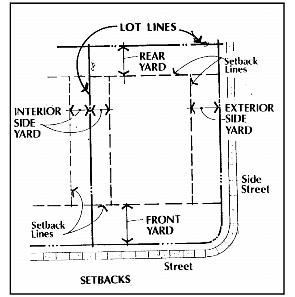 While the answer to the question posed in the title to this article seems obvious enough, it is actually a fairly complex question in many jurisdictions on Long Island. It is important to know where the front yard for your property is because municipalities typically regulate the location and types of structures that can be