
Zoning codes are often at odds with a property owner’s intended use for its site. In certain situations, a property owner may be able to use the site as intended. For example, if the actual use pre-dates the zoning code change, it can continue as a non-conforming use. This is frequently referred to as the
Court Clarifies and Limits Prior Ruling on Challenges to SEQRA Positive Declarations

A recent ruling by the New York Court of Appeals strictly limits a developer’s right to appeal a positive declaration under the State Environmental Quality Review Act (“SEQRA”). A “positive declaration” triggers the need for a draft environmental impact statement (“DEIS”) because there is a finding that the project has the potential to result in
Renewable Energy – It’s Not Just Blowing In The Wind
New York State is actively promoting the development and implementation of renewable energy sources. New York State’s 2015 Energy Plan has a goal of 50% of power coming from renewable sources by 2030.
 Clean Energy Standard
Late last year, the Governor directed the New York State Department of Public Service (NYSDPS) to develop a Clean
Pine Barren Credits – There’s Money In Those Trees
On July 14, 1993, the Long Island Pine Barrens Protection Act was signed into law by Gov. Mario Cuomo, creating one of the largest comprehensive land management plans in New York history.
After the State Legislature determined to protect approximately 100,000 acres of the Long Island Pine Barrens, the towns of Brookhaven, Riverhead and Southampton
Suffolk County’s New Agricultural and Farmland Protection Plan
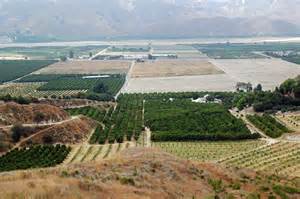 In December 2015, Suffolk County adopted an Agricultural and Farmland Protection Plan. The previous plan was adopted twenty years ago. This new plan discusses the current state of agriculture, sets goals for the future and provides recommendations to increase competitiveness and resiliency. Here are some highlights from the 2015 Plan.
Fun Facts
Did you
Are Sustainability Plans and Climate Action Plans Helping to Preserve the Future of Long Island?
Several weeks ago, we wrote about the Village of Great Neck Plaza implementing a climate action plan to combat climate change. We now report on the efforts of other municipalities on Long Island to implement sustainability plans and climate action plans that are aimed at preserving and protecting Long Island’s future. Can these plans achieve
Marketing Activities of Vineyards: When Do Local Zoning Laws Apply?
With an increase in the number of vineyards marketing themselves as venues for wedding receptions and special events, local governments across New York State have begun enacting legislation aimed at curtailing the marketing activities of vineyards, indicating that they are seeking to protect the health and safety of their communities.  Some towns and villages now
Mining in the Hamptons: Appellate Division Affirms Town of Southampton Zoning Board of Appeals Limitations on Pre-existing Nonconforming Uses Associated with Hamptons Mining Operation
Located in the hamlet of Bridgehampton, Town of Southampton, a sand mine operation owned by Sand Land Corporation and run by Wainscott Sand & Gravel Corporation (“Sand Land”) had its zoning changed by the Town in 1972 from G-Industrial to CR Country Residence, now CR200, constituting five-acre residential zoning.  Upon the zone change, the sand
Municipal Moratoriums, The Suffolk County Planning Commission and The Sag Harbor and Patchogue Experience
In recent months, the Village of Sag Harbor and the Village of Patchogue enacted moratoriums aimed at halting large-scale residential development, and in Patchogue’s case, including multi-family residential development. Both Villages learned that enacting moratoriums is not only subject to referral to the Suffolk County Planning Commission (“SCPC”) pursuant to General Municipal Law § 239-m
Justice Brennan’s “Miraculous Tool” Has Arrived: The Government Drone Zone
 On February 26, 2016, we published our first Drone blog post: FROM PEEPING TOMS TO PEEPING DRONES: Help, Big Brother Government is Peeping in My Backyard. We advised that New York State is presently considering multiple bills all designed to regulate drones and drone users. Further, Suffolk County and the Town of Huntington adopted drone